
Emergency Air Duct Cleaning Near Me: What Williamsburg Homeowners Should Do First
After a kitchen fire, a burst pipe, or the day you pull a vent cover and see mold, the instinct is to start cleaning right away. Turn off the HVAC system first. Running the system while soot, moisture, or spores are still suspended in the air pushes contamination into every duct branch in the house, and a problem that started in one room becomes a whole-system job. That single decision in the first hour shapes how much work is recoverable. If you’d rather have a trained eye make the call, reach us at (833) 508-9915.
Why the First 60 Minutes Matter More Than the Cleaning Itself
Most emergencies involving ductwork aren’t really duct emergencies yet. They’re air-quality emergencies that will become duct emergencies if the system keeps running. Soot from a stove fire, sewage mist from a basement backup, and mold spores stirred up by water damage all behave the same way: they travel on moving air and settle on duct walls, turning vanes, and the blower housing.
In our experience, the homes with the best outcomes after a fire or flood are the ones where someone stopped the system early. The ones that run the heat “just to see if it still works” tend to need more extensive cleaning and often a sanitizing step they wouldn’t have needed otherwise.
Here’s what that first hour should look like:
- Turn off the HVAC system at the thermostat. Set it to Off, not Auto. Auto can cycle the fan on without warning.
- Kill power to the air handler or furnace at the breaker if you can reach it safely. This stops the blower from running during inspection or cleanup.
- Close the registers in rooms where the event happened, if the covers adjust. This limits how much loosened debris drops into those branches.
- Keep people and pets out of the affected rooms while particles are still airborne.
- Don’t run a box fan or shop vac in a soot or mold area. Both stir settled particles back into the air.
- Take photos before anything is moved. More on that below, but do it now, not later.
One Williamsburg homeowner told us they’d “only run the fan for a minute” after a small grease fire. That minute is usually enough to coat a return trunk. A little humor helps here: the fan is the most obedient appliance in your house. It does exactly what you ask, including the thing you’ll regret.
How to Tell If the Contamination Has Already Reached Your Ducts
You can often tell whether a fire, flood, or mold event has moved into the duct system before anyone opens a panel. The signals are visible and smellable, and they’re worth checking while the system is off.
- Odor that returns when the system runs. If the burn or musty smell fades when the HVAC is off and comes back when it cycles on, contamination is sitting in the system, not just the room.
- Visible streaking at the registers. Dark smudges around supply grilles after a fire point to soot that was carried through and deposited at the outlet.
- Dust patterns on the return grille. A return that looks darker or dirtier than the rest is often the path the contamination took.
- Water staining near the air handler. Flood intrusion and roof leaks often reach the unit before the ducts. Staining on the cabinet or insulation is a reason to look inside.
- Musty smell in one zone only. That points to a specific branch, usually the one nearest the moisture source.
- Visible growth on flex duct or insulation. If you can see it through a vent with a flashlight, assume the run needs assessment.
What you shouldn’t do is pull flex duct apart to look. Flex duct is easy to damage and hard to reseal, and an open run in a contaminated house just spreads the problem. Professionals use inspection cameras and negative-air equipment for exactly this reason. If you need air duct cleaning in Williamsburg, the assessment always comes before the cleaning, not after.
What to Have Ready Before You Call
When you call for emergency air duct help in Williamsburg, the person on the other end can triage much faster if you have four things ready. These are the questions a good technician will ask, and having answers shortens the whole process.
- What kind of system you have. Furnace and central air, heat pump, or a high-velocity small-duct system. If you’re not sure, the brand name on the air handler cabinet is enough to start.
- What happened. Fire, smoke, water intrusion, sewage backup, or a mold discovery. Each one calls for different containment.
- Whether the HVAC ran after the event. And for how long, roughly. Even “we turned it off within a few minutes” is useful information.
- Where your duct access points are. Attic, basement, crawlspace, or a mix. If you know where the main trunk runs, say so.
Also mention whether anyone in the home has respiratory sensitivities. It doesn’t change the cleaning method, but it does change how carefully we sequence the work and how much ventilation we set up.
Emergency Response Isn’t the Same as the Cleaning Work
This is the part most homeowners don’t expect, and it’s worth saying plainly: in a major event, the emergency visit is containment and assessment. The full cleaning usually can’t safely start the same day.
Here’s why. After a fire, soot and char residue are often still settling, and the structure may not be cleared for occupancy. After a flood, materials need to dry before ducts can be judged or cleaned, because cleaning wet contamination just smears it. With mold, the moisture source has to be found and corrected first, or the growth returns. Sprinkling a sanitizer into a wet system is like mopping a floor while the faucet’s still running.
What the first visit does accomplish:
- HVAC shutdown verification and safe isolation of the system
- Camera inspection of the main trunk and accessible branches
- Containment setup with negative-air equipment so dislodged particles don’t migrate into living space. We use Nikro vacuum and negative-air systems for this, the same category of equipment remediation contractors use.
- A written scope of work, which is what your insurer will want to see
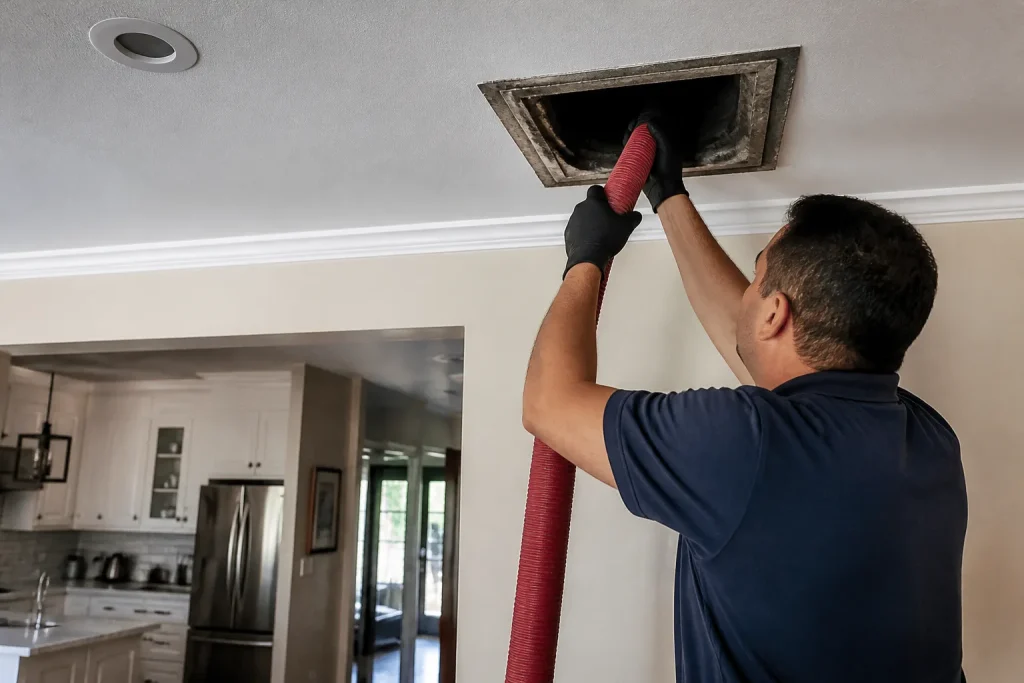
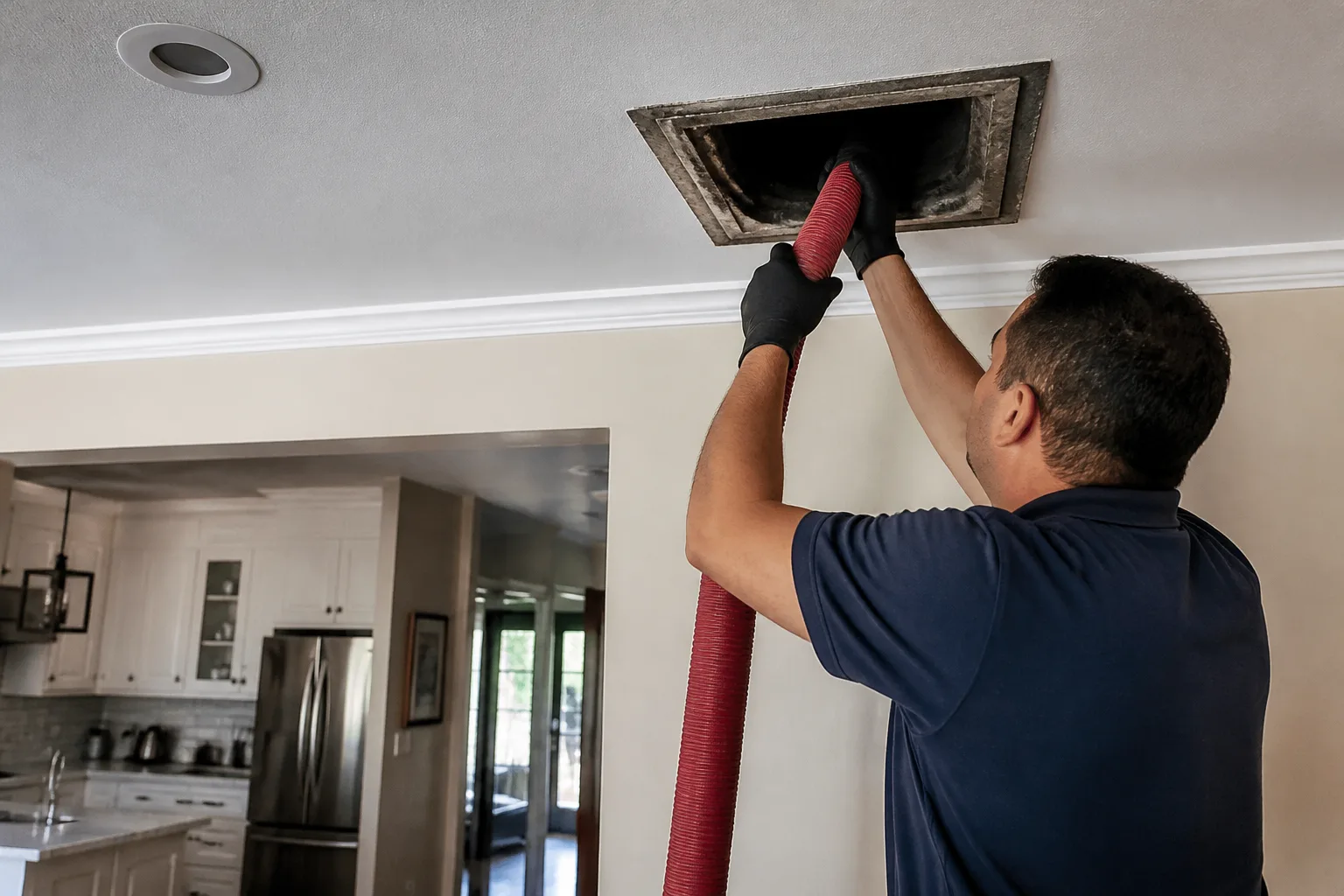
The actual cleaning, when it happens, is mechanical first: a Rotobrush rotary brush system to break debris off duct walls, paired with negative-air collection. Cleaning alone doesn’t fix a system with leaks, though, and leaks are common after fire or water damage. That’s why we also do HVAC cleaning and duct repair and sealing in the same scope, because a cleaned duct with a torn joint behind it just re-contaminates the run it feeds.
Insurance Documentation: What to Gather Before Cleaning Starts
If you plan to file a claim, the documentation has to exist before cleaning begins. Once the ducts are clean, there’s nothing left to photograph, and adjusters work from what was recorded at the time of loss.
- Wide photos of each affected room showing soot lines, water staining, or visible growth, taken before anything is wiped or moved
- Close-ups of registers and returns with the covers off if you can safely remove them
- The HVAC unit and its data plate, plus any visible staining on the cabinet
- A photo of the thermostat setting at the time you shut the system down
- Your insurance policy number and claim contact, ready for the technician
The technician’s findings fill in the rest. A camera inspection report, the written scope of work, and before-and-after photos of the ducts give an adjuster a clear picture of the loss. We can work with your insurer to provide that documentation. We don’t bill your insurer directly, but we can supply what they ask for.
One more insurance note: if your dryer vent was involved in the event, say so. dryer vent cleaning is a separate scope, and lint fires are documented differently than duct losses.
When to Call a Pro (and When Not To)
Call a professional the same day if any of these are true:
- There was a fire, even a small one, and the HVAC ran afterward
- Water reached the air handler, the return trunk, or the insulation around either
- A sewage backup affected the basement or crawlspace where ductwork runs
- You can see or smell mold inside the system, not just around a bathroom vent
- Anyone in the household has asthma or another respiratory condition
You probably don’t need an emergency visit for a dusty vent cover, a single room that smells faintly musty when the heat first kicks on in fall, or a filter that clearly needs changing. Those are maintenance issues. Take a photo, note when you noticed it, and book a routine assessment.
If you’re not sure which side of that line you’re on, call and describe it. A quick phone conversation usually sorts it out. One call covers cleaning, repair, and air quality upgrades, so you’re not coordinating three different contractors after a loss.
If you’re in Williamsburg and want a free estimate rather than a guess, reach us at (833) 508-9915. We answer 24/7. Fast dispatch from 7am to 7pm, Sunday through Friday. Our technicians have up to 13 years of experience with fire, water, and mold-affected duct systems, and we’ll tell you honestly if the work can wait a day.
The Bottom Line
The order of operations after a duct emergency is simple, and it’s the opposite of what most people do. Shut the HVAC down, document everything with photos, then call. Containment and assessment come first. Cleaning comes after the source is stabilized, whether that’s a fire, a leak, or an active moisture problem.
Most of what goes wrong in these situations isn’t caused by the fire or the flood. It’s caused by the system running for a while after, and by cleaning that starts before anyone knows how far contamination spread. A camera inspection, a written scope, and before-and-after photos cost you nothing to ask about, and they’re the difference between fixing a room and redoing a house.
In Williamsburg, address the source before you address the ducts, and the ducts will hold up. If you’re in Williamsburg and need help, Air Duct Cleaning Williamsburg offers free estimates. Call (833) 508-9915 to get one.
Frequently Asked Questions
There’s no single emergency price, because the cost depends on the size of the system, how far contamination spread, and whether repair or sealing is part of the scope. What you should expect is a written estimate before any work starts, with the price set per system, not per vent. If a quote comes as a low phone number that grows once someone is standing in your hallway, ask for the written scope first. A free estimate is the only number that should matter before the work begins. Call (833) 508-9915 for an exact quote – estimates are free.
Yes. Turn the thermostat to Off, not Auto, and cut power to the air handler at the breaker if you can reach it safely. Every minute the blower runs after a fire moves soot further into the return trunk and branch ducts. Doing this one thing before you call is the most useful step a homeowner can take. Once it’s off, call (833) 508-9915 and describe what happened.
Because the emergency visit is containment and assessment, not cleaning. After a fire, soot is often still settling and the structure may not be cleared. After a flood, materials have to dry before ducts can be properly assessed and cleaned, or the contamination returns. Cleaning wet or unsettled contamination spreads it rather than removing it. The first visit establishes what needs to happen and gives your insurer something to work from. Call (833) 508-9915 to book the assessment.
Ask for before-and-after photos of your own ducts, taken through the access points, and a written scope of work that matches what was quoted. Camera inspection footage is the clearest proof, and it’s also what an adjuster will ask for on a claim. A company that won’t put photos in front of you hasn’t shown you the work. Call (833) 508-9915 to get a free estimate and a clear scope.
Written by the team at Air Duct Cleaning Williamsburg.
Need Air Duct Cleaning Help?
Call Air Duct Cleaning Williamsburg - the local pro we connect you with is licensed and insured, with free written estimates in Williamsburg.
(833) 508-9915