
Abatement Technologies Air Duct Cleaning in Williamsburg: A Homeowner’s Guide
Most duct cleaning equipment is built to move debris. Abatement Technologies systems are built to contain it. That difference matters more than any spec sheet when your Williamsburg building has shared air handling, or when mold is part of the equation. Plenty of homeowners ask us whether remediation-grade equipment is really necessary or just a fancier version of the same vacuum. The honest answer is that it depends on what’s actually in your ducts – and knowing which situation you’re in is the whole point of this guide. If you’d rather have someone look at your system than sort through the theory, call (833) 508-9915 and we’ll give you a straight answer.
What Makes Abatement Technologies Equipment Different From a Shop Vacuum?
Abatement Technologies equipment is HEPA-filtered negative-air machinery engineered for contamination remediation – the kind of work done after mold, asbestos, or sewage events. A standard high-CFM shop-style vacuum moves a lot of air fast. That’s the goal: pull dust out of the ductwork. But air volume and containment are different jobs. When a conventional vacuum pulls air out of a duct, it also exhausts fine particulate back into the room unless the filter captures it. Remediation-grade machines are built around the opposite priority: keep the contamination inside the machine, at a filtration standard that holds up to inspection.
Here’s what that actually means in a Williamsburg apartment or rowhouse:
- Negative pressure: The machine draws the work area into a slight vacuum relative to the rest of the home, so loosened debris travels toward the filter, not into your living room.
- HEPA filtration: The exhaust passes through a filter rated to capture particles far smaller than what a shop vacuum’s filter bag holds.
- Sealed containment: Hoses and connections are taped or clamped at penetration points rather than pressed into a vent and hoped for the best.
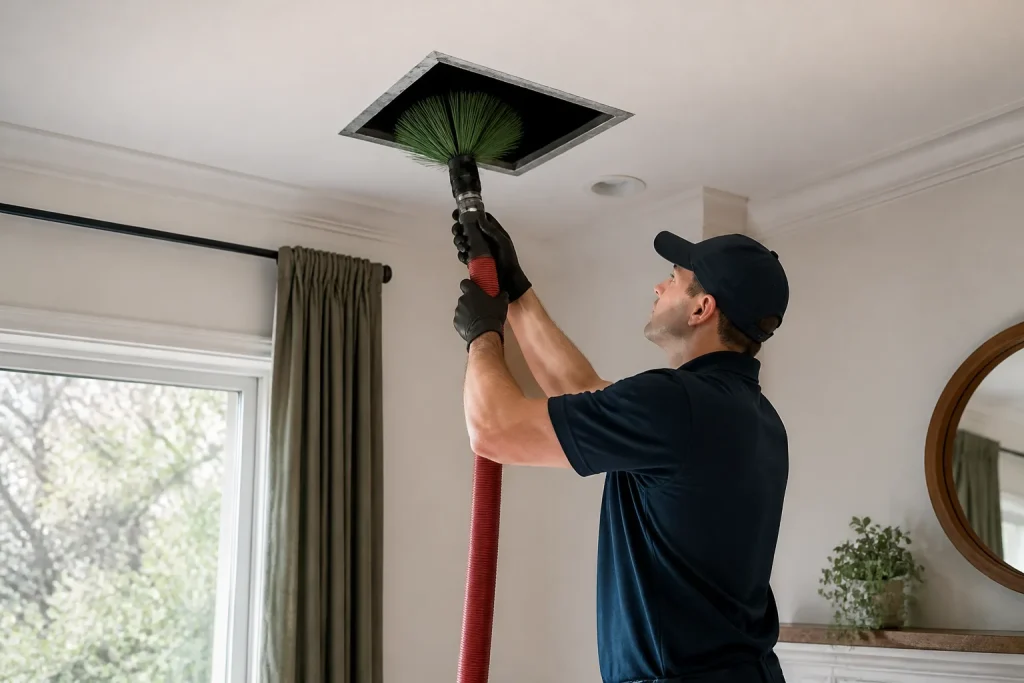
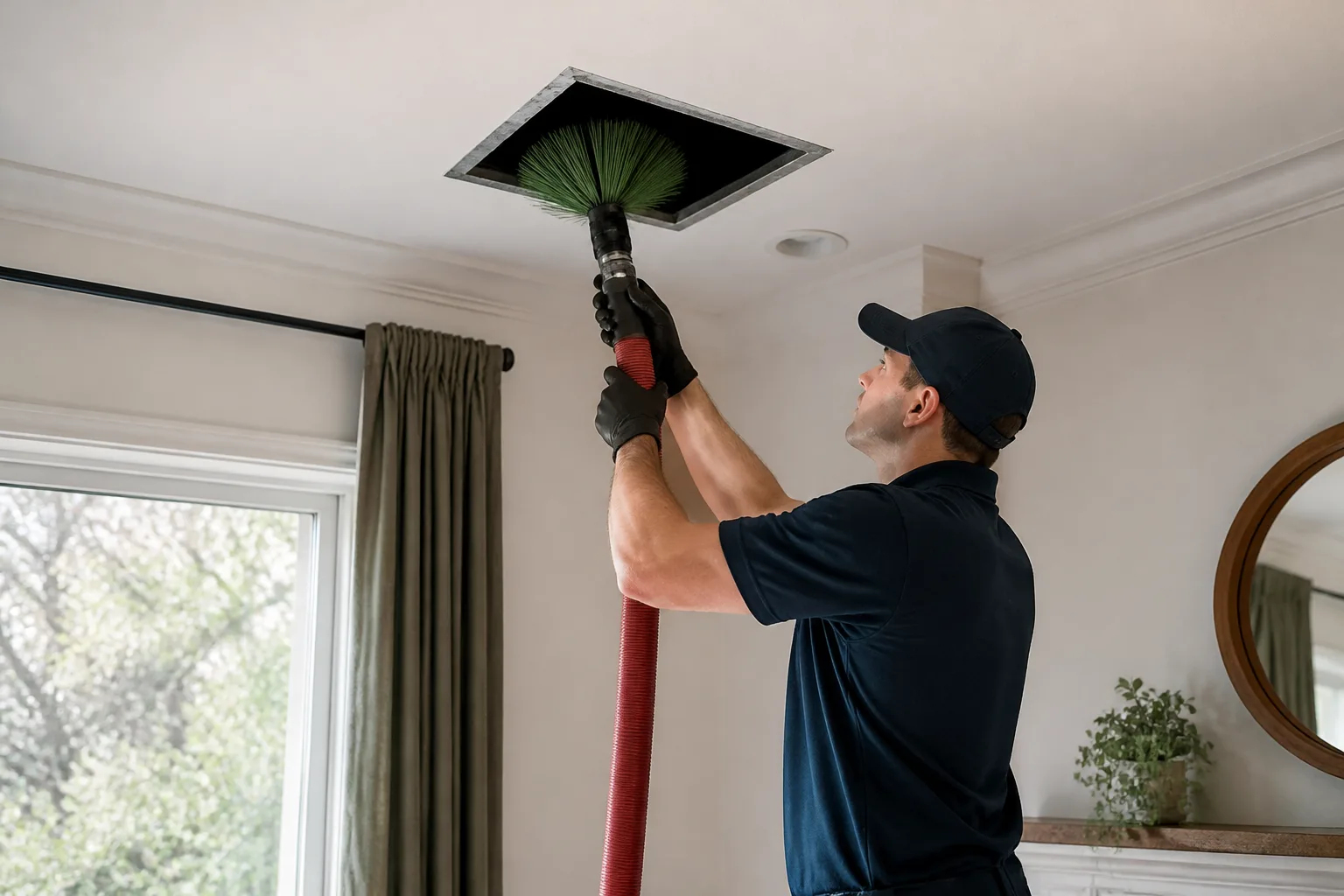
We pair this with a Rotobrush rotary brush system for the mechanical side – the brush that actually scrubs the duct walls – because containment only helps if the debris is also being loosened properly. You can read more about our standard approach on our air duct cleaning page.
When Is Remediation-Grade Equipment the Right Choice in Williamsburg?
Remediation-grade equipment is the appropriate choice when the contamination is more than settled dust. Three scenarios come up again and again in Williamsburg buildings:
- Post-flood duct work. After water intrusion, ducts can hold moisture and the microbial growth that follows. Standard vacuuming spreads spores; containment equipment removes them without redistributing them through the home.
- Confirmed mold in the air handler. If a technician has found visible growth on the evaporator coil or inside the plenum, that’s a remediation question, not a housekeeping one. The same HEPA standard that professionals rely on in mold projects applies here.
- Multi-unit buildings with shared air handling. In a condo or apartment building where return air crosses unit boundaries, the stakes on containment are higher. One unit’s dust becomes another unit’s problem if the work isn’t sealed off.
For a typical single-family home with ordinary dust and no moisture history, professional cleaning with a rotary brush and strong negative air is usually enough. The premium for full remediation-grade containment isn’t justified if there’s nothing to contain. That’s why we inspect before we recommend – the equipment should match the risk, not the sales pitch.
How Does Containment Work in an Occupied Apartment or Condo?
Containment in an occupied unit is a setup discipline, not a single machine. Before any hose goes into a vent, we establish negative pressure so the living space stays at a slightly higher pressure than the duct and work area. Loose debris then travels toward the filtration unit instead of drifting into the room.
In practice, on a Williamsburg apartment or condo job, the setup looks like this:
- Penetration points at each register are sealed with tape or plastic so the only air path is through the machine.
- The HEPA negative-air unit runs throughout the service, not just at the end.
- Furniture and flooring near the work zone are covered.
- We work room by room so you’re not displaced from the whole unit at once.
If your building has a shared mechanical room or a common return, we coordinate access and note where the system connects across units. This is one reason we handle HVAC cleaning alongside duct work – the air handler and coil are often where the real contamination sits. We also see how a clogged dryer vent compounds the load on a tight building’s ventilation, which is why dryer vent cleaning belongs on the same inspection list.
What Should a Technician Document Before and After the Job?
Proper documentation is where remediation-grade work separates itself from a quick vacuum. A technician using Abatement Technologies equipment should record the condition of the system before any cleaning begins, and the same views after. That record is what makes the work verifiable.
Before-and-after documentation typically includes:
- Photographs inside the duct runs, the air handler, and the plenum, showing contamination and the cleaned result from the same angle.
- Notes on moisture or microbial growth observed during inspection, with location.
- The equipment used and the filtration standard the machine meets.
- Sealing and repair work performed, with the locations of any leaks found and closed.
Why does this matter beyond a tidy file? If you’re filing a homeowner’s insurance claim after water damage, your insurer will want evidence the ducts were affected and properly addressed. If you rent and there’s a dispute with a landlord over mold, dated photos are your record. And if someone in the household has a documented respiratory condition, a before-and-after set gives a physician something concrete to reference. We give you before-and-after photos of your own system as a matter of course.
Does Remediation-Grade Equipment Cost More, and Is It Worth It?
Remediation-grade equipment carries a premium over standard professional cleaning because the machines, filters, and the time to set up full containment cost more to run. A typical duct cleaning is estimated per job, and the written estimate sets the final price – so the number depends on the size of the system, the number of runs, and whether containment is required. We don’t quote per vent, because every vent isn’t the same amount of work.
When is the premium justified?
| Situation | Standard professional cleaning | Remediation-grade containment |
|---|---|---|
| Routine dust, no moisture | Usually sufficient | Not necessary |
| Post-flood duct work | Insufficient | Appropriate |
| Confirmed mold in air handler | Insufficient | Appropriate |
| Multi-unit shared air handling | Risky without containment | Appropriate |
| Allergy-driven routine upkeep | Usually sufficient | Case by case |
We’ve walked into Williamsburg homes where a coupon-price cleaning was booked on a system that genuinely needed containment, and the crew arrived without the machine for it. That’s the gap a flat price per system and an honest inspection closes. Ask what standard the equipment meets before you book.
When to Call a Pro
Some situations are obvious: water damage in the walls or floors, visible growth on the coil, or a persistent musty smell that comes back after cleaning the rest of the home. Others are subtler. If the dust in a room returns within days of wiping it down, if you notice a whistle or rattle from the registers, or if you’ve had a flood or roof leak anywhere near the HVAC system, it’s worth having the ducts inspected by a team that can tell you whether standard cleaning will do the job or whether containment is required. Call us and we’ll tell you which category you’re in – even when that means recommending the simpler job.
Related services in Williamsburg: duct repair and sealing, plus air quality and sanitizing as a follow-up step once the system is clean.
The Bottom Line
Abatement Technologies equipment is remediation-grade machinery, engineered to contain contamination rather than just move it. For a Williamsburg home with routine dust, professional rotary-brush cleaning with strong negative air does the job. For post-flood work, confirmed mold, or buildings with shared air handling, the HEPA containment standard is the difference between a clean system and a spread one. The right call depends on inspection, and a written, flat-price estimate per system keeps it honest – we can work with your insurer where documentation matters, and the estimate is free.
If you’re in Williamsburg and need help, Air Duct Cleaning Williamsburg offers free estimates – call (833) 508-9915. We answer 24/7. Fast dispatch from 7am to 7pm, Sunday through Friday.
Frequently Asked Questions
Standard professional cleaning is enough for routine dust in a home with no moisture history. Abatement Technologies equipment is necessary when there’s active contamination – post-flood ducts, confirmed mold in the air handler, or shared air handling in a multi-unit building – because HEPA containment keeps spores and debris from spreading during the work. Call (833) 508-9915 for an inspection to determine which situation applies to you – estimates are free.
A shop-style vacuum moves a lot of air quickly, but its filtration is lighter and its exhaust can carry fine particulate back into the room. A HEPA negative-air machine is built to keep contamination inside the unit, exhausting through a filter rated to capture far smaller particles. The clinical difference is containment, not suction.
Yes. Containment in an occupied unit is a matter of setup: sealing each register, running the negative-air machine throughout the job, and covering nearby furniture and flooring. We work room by room so you don’t lose access to the whole apartment. Call (833) 508-9915 to schedule and we’ll explain the setup for your unit – estimates are free.
Yes – before-and-after photos of your own ducts, the air handler, and the plenum, plus notes on any moisture or growth observed and the sealing work performed. That record is useful for insurance claims, rental disputes, or a health file when someone in the home has a respiratory condition. Call (833) 508-9915 to book – estimates are free.
Written by the team at Air Duct Cleaning Williamsburg.
Need Air Duct Cleaning Help?
Call Air Duct Cleaning Williamsburg - the local pro we connect you with is licensed and insured, with free written estimates in Williamsburg.
(833) 508-9915