
Top Signs You Need Air Duct Cleaning Service – Don’t Ignore These
Dust on a register grille is almost never a sign that your ducts need cleaning. It’s normal turbulence behavior, and it happens in new homes and old ones alike. The signs that actually matter are subtler and more specific to your HVAC system’s output: debris shedding from supply vents during operation, run times that stretch out, rooms that won’t hold temperature, odors that come back after cleaning, drywall dust pulled in after a renovation, or symptoms that track with the furnace running. Learning to tell cosmetic dirt from functional contamination keeps you from cleaning too early, or missing a real air quality problem. If you’d rather not sort through it yourself, call (833) 508-9915.
Sign #1: Debris Shedding From Supply Vents During Operation
Here’s the distinction most homeowners never hear: dust sitting on the outside of a grille is cosmetic, and debris blowing out of a supply vent while the system runs is functional. Spotting the difference comes down to when and how the dust appears.
Normal register dust settles on the grille face, is wispy, usually gray, and builds up slowly over weeks. It comes from room-side air and ordinary household traffic. Debris shedding from a supply vent during operation is a different animal. It falls or blows out of the vent with fan pressure, appears as a flake or a puff just after the blower kicks on, and often has a dark or matte tint. That material was sitting inside a duct run and got dislodged.
How to tell them apart:
- Watch the vent for two or three minutes after the blower starts. Refrigerator-magnet dust that never moves is surface grime. Material that appears only with airflow has come from inside the run.
- Wipe a grille face with a white cloth and compare it to a wipe taken from the inside of the same register after removing the cover. If the inside wipe comes back considerably darker, the supply is transporting debris.
- Check ceiling vents in a bedroom that’s rarely used. Rooms with low occupancy but high shedding tell you the source is the ductwork, not the room.
- In Williamsburg homes with wall-to-wall carpeting and hot-water baseboard conversions, we pay extra attention to the first few vents off the main trunk. They see the most airflow and the most surface wear.
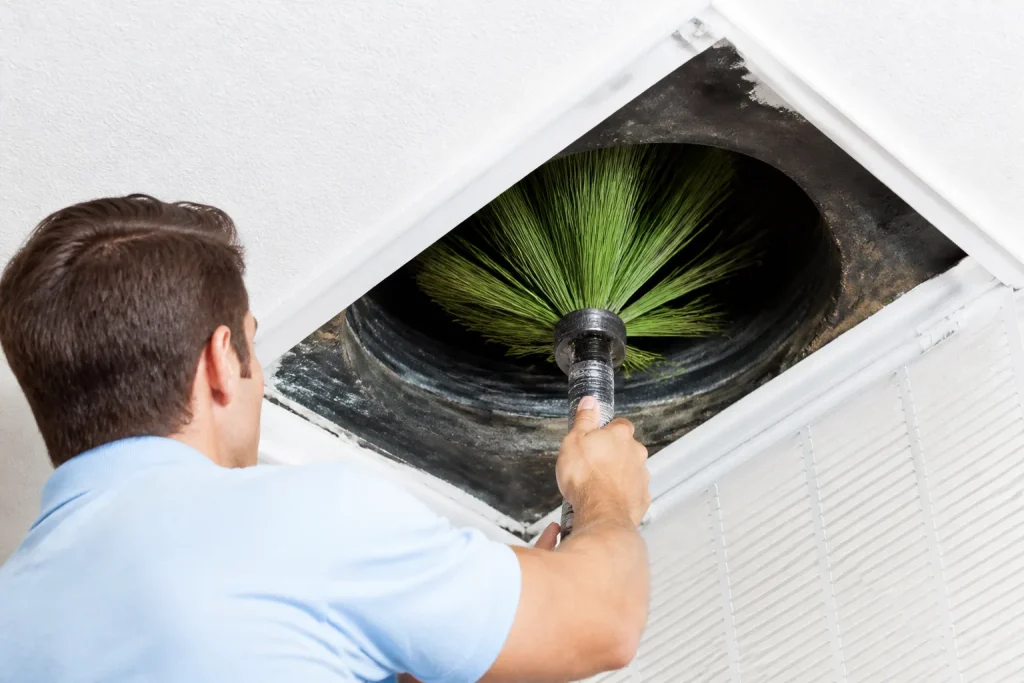
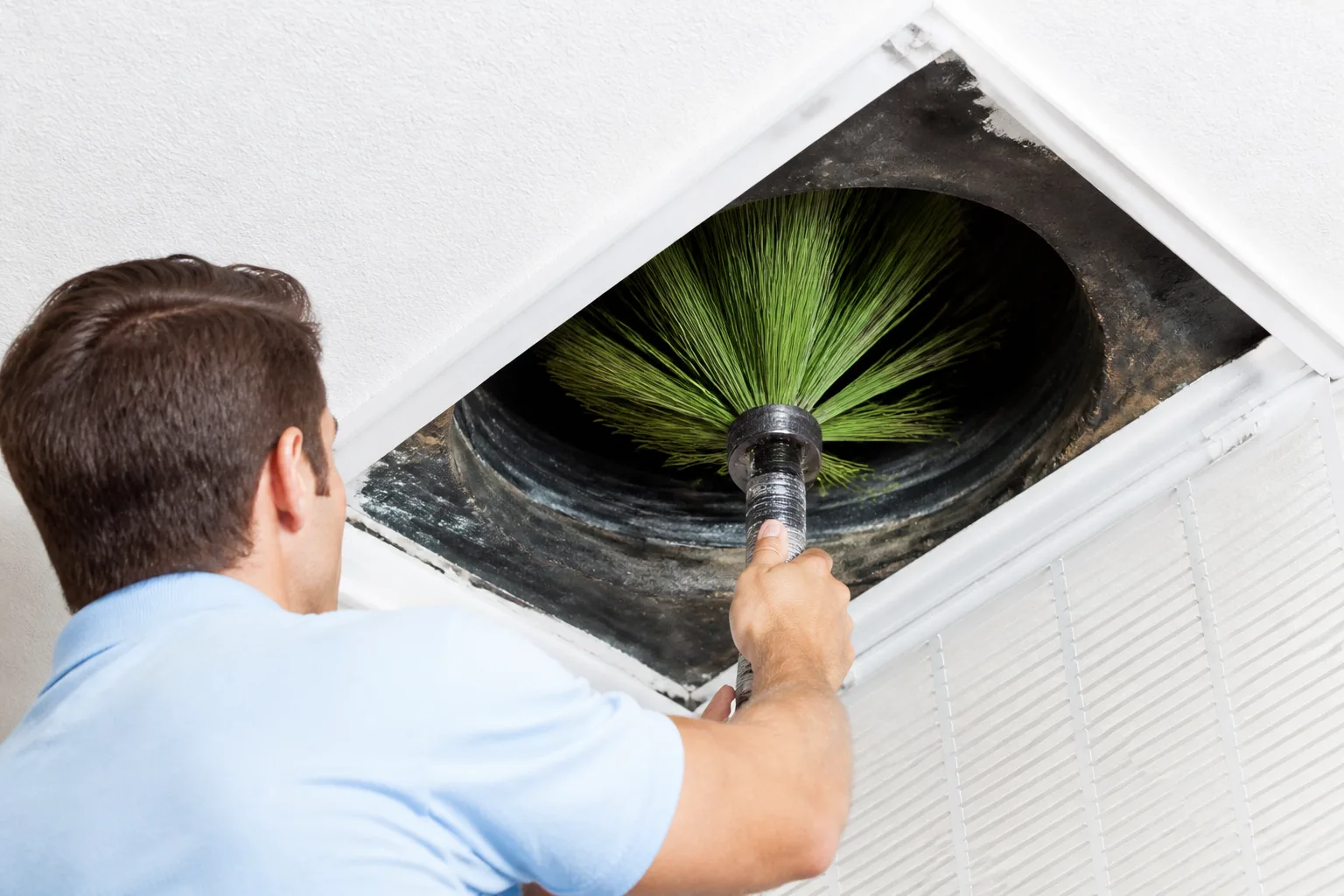
When material keeps appearing at the supply despite a clean register and a clean filter, the duct run itself is holding debris. That’s the point where professional cleaning with a rotary brush system is worth scheduling, and where a proper pre-service walkthrough with a camera or inspection port matters more than the price of the job.
Sign #2: HVAC Performance Degradation You Can Measure
If your furnace or air handler is running longer, cycling more often, or developing room-to-room temperature differences that didn’t exist before, restricted ductwork is a real suspect. Debris accumulates along the inside of the runs, increases static pressure on the blower, and pushes the system to work harder to deliver the same airflow.
Static pressure is the resistance air meets as it moves through ducts, filters, coils, and diffusers. Duct cleaning contractors measure it with a manometer at the supply and return plenums, and rising total external static pressure is one of the clearest signals that something is choking the system. You don’t need to buy a manometer to notice the symptoms, though. Watch for:
- Longer run times on heating or cooling calls than a year or two ago.
- Room-to-room temperature swings mapped to specific duct runs. Cold bedrooms on the far end of a long trunk line, or a single room that never keeps up, is the classic sign.
- Weak airflow felt at the farthest registers but strong airflow at the ones nearest the air handler.
- A blower that sounds louder or has developed a hum – straining against restriction is how a motor tells you it’s unhappy.
In our experience, the last register on a long run tells the real story. If the spray from a vent in far-bedroom Williamsburg is barely enough to move a tissue while the return grille is pulling hard, the system is telling you something about restriction, and it’s worth a look before the AC season tests it further. Related: we handle HVAC cleaning when the coil and blower need attention alongside the ductwork.
Sign #3: Odors That Come Back After Cleaning
Odors that return after surface cleaning point to biological growth somewhere in the ductwork, coil, or drain pan. Where the smell comes from tells you which. This is one reason we treat odor as a diagnostic question first, not just a job to schedule.
A musty, wet-cardboard smell that spreads through the house when the fan runs usually points to microbial growth inside the duct runs or on the evaporator coil. A drain-pan problem often smells worse near the air handler or in the room where the handler sits, and the smell intensifies when the AC drains most heavily. Coil growth tends to smell stronger at the start of a cooling cycle and fade as the system runs.
Two problems, two solutions. If the growth is inside the ducts, mechanical cleaning with a rotary brush system followed by sanitizing is the working answer. If it’s the drain pan or the coil, that component needs separate treatment and sometimes a repair or replacement of the pan. Cleaning ducts that aren’t the source is like vacuuming a room with a broken window. We incorporate Guardsman-grade cleaning and protection products into the sanitizing process, and we use Abatement Technologies air filtration within the service to address contamination beyond surface dust. Matching the treatment to the actual source is the difference between an odor that stays away and one that comes back in a few weeks.
Sign #4: Post-Renovation Dust Inside the Ducts
If you’ve just finished a renovation, drywall dust and construction debris in the ductwork is a time-sensitive problem, not a cosmetic one. Drywall dust is fine, alkaline, and slightly abrasive, and it settles across the interior surfaces of runs, coils, and blower wheels. Left in place, it coats the coil and blower, drives up static pressure, and can be drawn into the airflow for months as the system cycles.
The tricky part is the timing. Dust resuspended during construction often settles after the work appears done, and a return-air grille that looked clean during the drywall stage can pull material into the trunk just as the crew is packing up. Fine-grit drywall particles also hold moisture differently than ordinary household dust, so growth risk on a humid July day in Williamsburg is higher than the same debris would cause in February. We usually recommend cleaning once the final construction dust has settled and just before you start moving furniture back into the finished rooms.
- Drywall dust is alkaline and slightly abrasive; it’s not just visually annoying.
- It migrates deepest when the fan runs during construction. If the system was on during the drywall stage, assume material reached the coil.
- Fine particles hold moisture and support microbial growth if left in place.
- A final-clean step with a rotary brush system and negative-air vacuum prevents redeposit across the home.
Renovation cleaning is one of the few times where we recommend scheduling the job even if the system otherwise seems fine. It’s cheaper and easier than cleaning a coil months later.
Sign #5: Symptoms That Track With HVAC Operation
If allergy or respiratory symptoms seem worse in rooms closest to supply vents, or track with the system cycling on and off, the ductwork is a reasonable suspect. The clinical connection is this: duct surfaces can accumulate dust, mold spores, and particulate matter, and each time the blower runs, some of that material becomes airborne in the supply air. If a person is sensitive to that material, symptoms tend to cluster where the air is delivered and worsen during heating and cooling seasons.
We’re not diagnosing anyone’s health, and a doctor should be the one to weigh in on respiratory symptoms. What we can do is describe the correlation to look for:
- Symptoms that are mildest when the HVAC system is off for a stretch and worse when it cycles regularly.
- A child’s or partner’s bedroom being the room where they seem most affected, especially if that room sits on the farthest duct run.
- Symptoms that improve when away from home for more than a day or two.
- Visible dust or a musty smell on the supply vent in the same room.
When those patterns line up, cleaning is a reasonable intervention. When they don’t, the answer may be a Honeywell or Aprilaire filtration upgrade at the air handler, and evaluating both before scheduling a cleaning is the honest approach. In Williamsburg, where older homes often have original sheet-metal runs with plenty of interior surface area, that evaluation usually starts with inspecting the condition of the ducts in a few key spots.
When to call a pro
If you’ve checked the register versus the inside of the run, watched how the system behaves, and looked at the run times and the temperature swings, and the answer isn’t obvious, a walkthrough is worth the visit. We bring inspection equipment and can measure static pressure, look at the coil, and confirm whether the problem is ducts, coil, drain pan, or filtration. Call (833) 508-9915 for a free estimate.
The Bottom Line
The signs that really indicate a duct cleaning need are tied to system behavior, not the appearance of a register grille. Debris shedding from supply vents during operation, run times that stretch out, temperature swings mapped to specific runs, odors that come back after cleaning, drywall dust pulled in after a renovation, and symptoms that track with HVAC operation are the signals worth acting on. If you’re in Williamsburg and need help, Air Duct Cleaning Williamsburg offers free estimates – call (833) 508-9915. We answer 24/7. Fast dispatch from 7am to 7pm, Sunday through Friday. We use the same rotary-brush and negative-air equipment professionals rely on, not portable shop vacuums, and one call covers cleaning, repair, and upgrades.
Frequently Asked Questions
Look for functional signals, not cosmetic ones: debris falling or blowing from supply vents during operation, run times that keep lengthening, cold or hot rooms mapped to specific duct runs, or odors that return after cleaning. Visible dust on the grille alone doesn’t justify a call. Call (833) 508-9915 for a free estimate – the walkthrough answers the question more reliably than a checklist.
Most homes don’t need cleaning on a fixed schedule. The honest answer is to schedule when a system-performance signal appears, when there’s been a renovation, or when a source of contamination has worked into the ducts. Doing it on every calendar interval either cleans too early or cleans a system that wasn’t the problem. Call (833) 508-9915 and we’ll give you an honest read on whether your Williamsburg home is due.
Usually the difference is scope and equipment. A low quote often covers a shop vacuum pass through the vents, without negative-air containment, without coil inspection, and without any repair of the leaks between cleaning cycles. What you’re paying for in a real job is the rotary brush work, the negative-air vacuum that sweeps the whole home, and the ability to fix what’s found. Call (833) 508-9915 for an exact quote – estimates are free.
Ask for before-and-after photos of your own ducts and confirm the crew ran the negative-air unit for the duration of the visit. If a contractor won’t show the inside of the runs before and after, that’s your answer. We show the interior condition on arrival and on completion, and the difference between the two is what you’re paying for. Call (833) 508-9915 if you’d like to schedule a walkthrough. A local, qualified pro is licensed and insured as required by the state, and we can work with your insurer if a claim comes into play.
Related services in Williamsburg: we also handle dryer vent cleaning and air duct cleaning as part of the same visit. For the full picture of what we offer, see Air Duct Cleaning Williamsburg.
Written by the team at Air Duct Cleaning Williamsburg.
Need Air Duct Cleaning Help?
Call Air Duct Cleaning Williamsburg - the local pro we connect you with is licensed and insured, with free written estimates in Williamsburg.
(833) 508-9915